
3D Games











ABOUT 3D GAMES
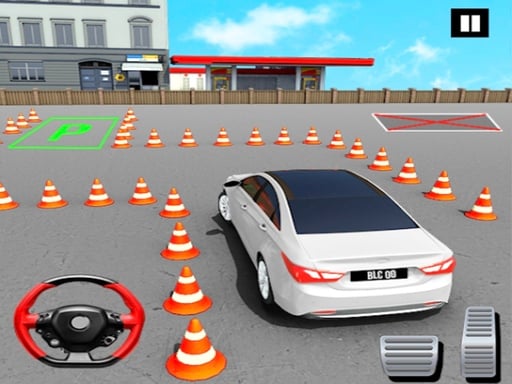
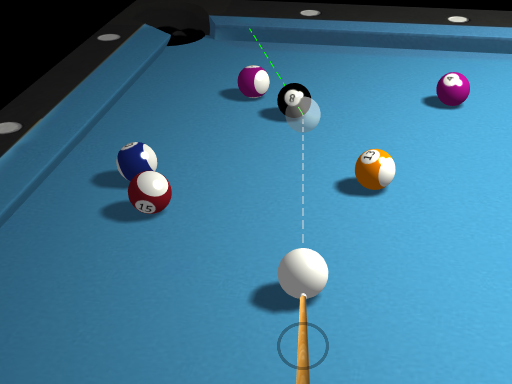
Perspective is everything. In 2D games, you're watching a story unfold on a flat surface. In 3D games, you're inside the story. The difference is profound. When you play a 3D game, your brain doesn't just process visuals—it processes space. You understand depth, distance, and spatial relationships in a way that 2D can never replicate. The first time I played a 3D game, I felt dizzy and amazed at the same time. My brain had to recalibrate. Left and right weren't enough anymore. I had to think in forward, back, left, right, up, down, and camera control. It was overwhelming. Then it became liberating. 3D games offer freedom that 2D games simply cannot. You can walk around obstacles instead of jumping over them. You can approach enemies from any angle. You can explore hidden areas that aren't visible from the main path. Level design in 3D is exponentially more complex—and that's a good thing. But 3D isn't just about freedom. It's also about immersion. Modern 3D games feature graphics that blur the line between game and reality. Ray tracing makes light behave like it does in the real world. Particle systems create realistic smoke, fire, and weather. Character models have thousands of polygons and lifelike animations. You can see the pores on a character's face, the individual strands of hair, the way cloth folds. It's almost unsettling. Of course, 3D games come with a cost. They require powerful hardware—a decent GPU, enough RAM, fast storage. Without it, you get stuttering, pop-in, and long load times. But most modern systems can handle 3D games at reasonable settings. The genre also introduces camera management as a skill. In 2D, the camera is fixed. In 3D, you control it. You have to constantly adjust your view to maintain situational awareness. It's a layer of complexity that turns off some players and hooks others. 3D has spawned entire genres that wouldn't exist otherwise. First-person shooters immerse you in the soldier's perspective. Third-person action games let you see your character's cool moves. Open-world RPGs let you traverse vast landscapes. Racing games put you in the cockpit. Without 3D, modern gaming would be a shadow of itself. If you've never played a 3D game, start with something simple—a third-person platformer or an open-world game with minimal combat. Give your brain time to adjust. Once it clicks, you'll wonder how you ever enjoyed 2D. It's not that 2D is bad—it's that 3D expands the possibilities of what games can be.